
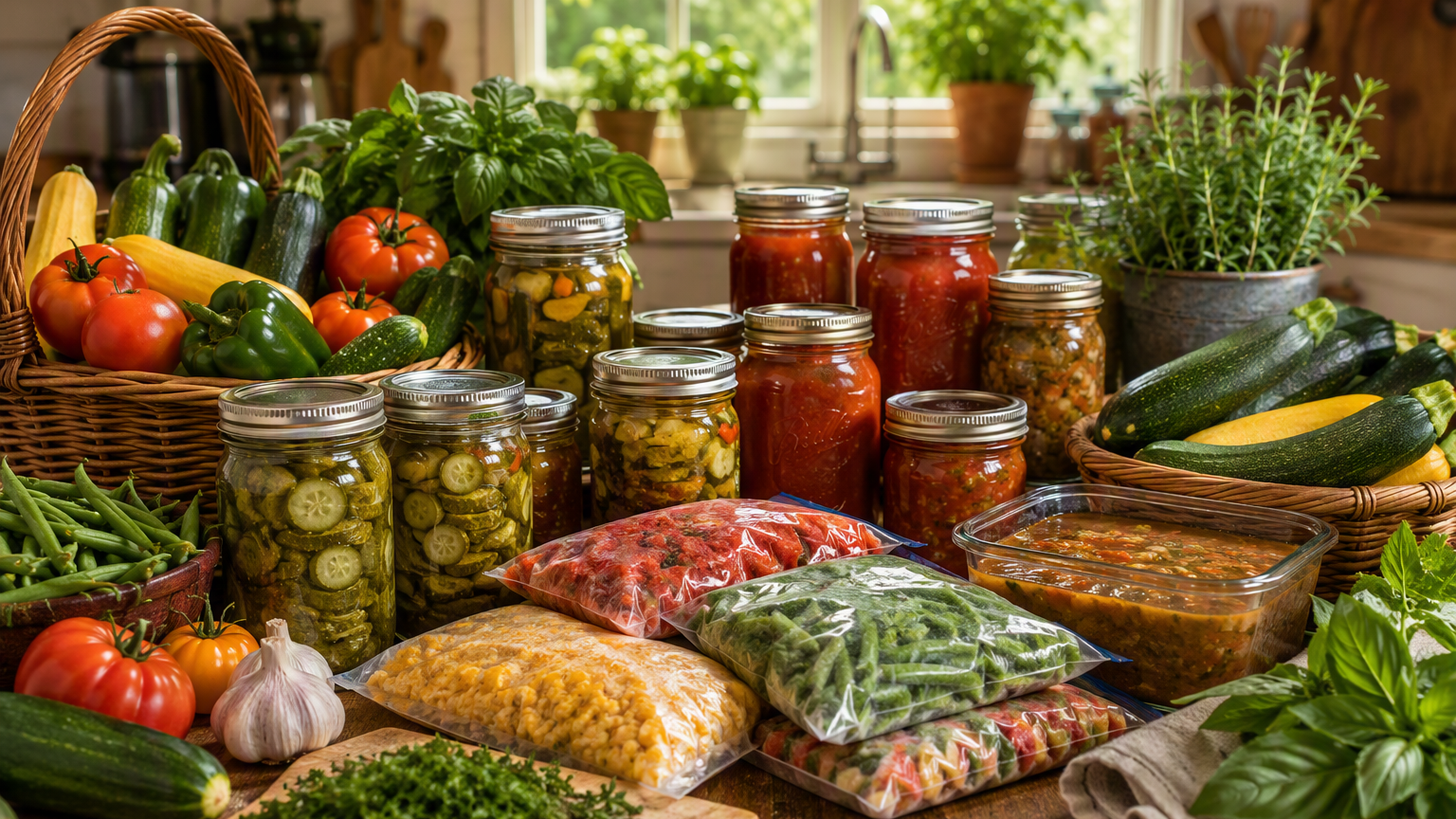
For many gardeners, August is the month when the garden truly hits its stride. Tomatoes ripen by the basketful, zucchini seem to multiply overnight, and it's not unusual to have more fresh vegetables than you know what to do with.
It happens every year. Gardens hit their peak, and suddenly there's more produce than most families can eat before it spoils.
The good news is that there are plenty of ways to put that harvest to good use.
Freeze Them for Later
Freezing is one of the easiest ways to save extra vegetables.
Green beans, sweet corn, peppers, peas, and tomatoes all freeze well. A few hours spent washing, chopping, and packaging produce can pay off months later when fresh garden vegetables are nothing more than a memory.
There's something satisfying about tossing homegrown peppers into a pot of chili on a cold winter evening.
A simple label with the date can also save a lot of guessing later. After a few months in the freezer, it's not always easy to tell one bag of vegetables from another.
Make Pickles
When cucumber plants are producing faster than you can eat them, pickling is a natural solution.
Of course, cucumbers aren't the only option. Green beans, carrots, peppers, onions, and even zucchini can be turned into crisp, flavorful pickles. Homemade relishes are another great way to use vegetables that may not look perfect but still taste great.
Many gardeners who start pickling out of necessity eventually make it part of their annual harvest routine.
Turn Tomatoes into Sauce or Salsa
Tomatoes often seem to ripen all at once.
One week you're waiting for them to turn red, and the next week every countertop in the house is covered with them. Making pasta sauce, salsa, tomato soup, or diced tomatoes for future recipes can help preserve that fresh summer flavor.
Large batches work especially well because tomatoes tend to produce in waves. A few hours of cooking can provide enough sauce to last well into winter.
Share with Friends and Neighbors
Sometimes the best solution is also the simplest.
Most people are happy to receive fresh garden vegetables, especially tomatoes, peppers, herbs, and cucumbers. Sharing extras helps reduce waste and spreads a little summer abundance around the neighborhood.
That said, if you're trying to give away zucchini in August, you may discover that everyone else has the same idea.
Donate to a Local Food Pantry
Fresh produce is welcomed by many food pantries, community kitchens, and local charitable organizations.
A productive garden can provide more food than one household needs, and donations can help families enjoy fresh vegetables they might not otherwise have access to.
It's worth making a quick call first to confirm what items are accepted and when donations can be dropped off.
Cook and Freeze Complete Meals
Instead of preserving vegetables individually, consider turning them into ready-made meals.
Vegetable soups, casseroles, stuffed peppers, pasta sauces, and roasted vegetable mixes all freeze well. Having meals prepared ahead of time can be especially helpful once busy fall schedules arrive.
Using vegetables this way often feels less like food preservation and more like future meal planning.
Dry Herbs
Herbs often grow faster than most people can use them fresh.
Basil, oregano, thyme, rosemary, parsley, and sage can be dried and stored for months. A small harvest can produce enough seasoning to last through much of the year.
Many people are surprised by how much flavor home-dried herbs retain compared to store-bought versions.
Try a New Recipe
A surplus of vegetables is a great excuse to experiment in the kitchen.
Extra zucchini can become bread, muffins, or fritters. Tomatoes can be turned into homemade soup. Peppers can be stuffed, roasted, or added to salsas. Cucumbers can be used in salads, cold soups, or refreshing summer side dishes.
Some of the best recipes are discovered simply because there were too many vegetables to ignore.
Host a Garden Swap
If your garden produced endless cucumbers but very few tomatoes, chances are someone else had the opposite experience.
A casual vegetable swap with friends, family, or neighbors can add variety to your meals without spending a dime. It's also a fun way to share growing tips and compare how everyone's gardens performed throughout the season.
Compost What You Can't Use
Even with the best planning, not every vegetable makes it to the table.
Overripe produce, trimmings, and unusable leftovers can be added to a compost pile rather than thrown away. Those scraps eventually become nutrient-rich material that can help next year's garden grow even better.
It's a simple way to keep the growing cycle going.
Make the Most of the Harvest
A successful garden often comes with one challenge: figuring out what to do with all the food it produces.
Whether you freeze vegetables, make pickles, cook freezer meals, share with neighbors, donate to a local food pantry, or try a few new recipes, August is the perfect time to enjoy the rewards of a productive growing season.
And if your kitchen currently has more zucchini than available counter space, you're definitely not alone.